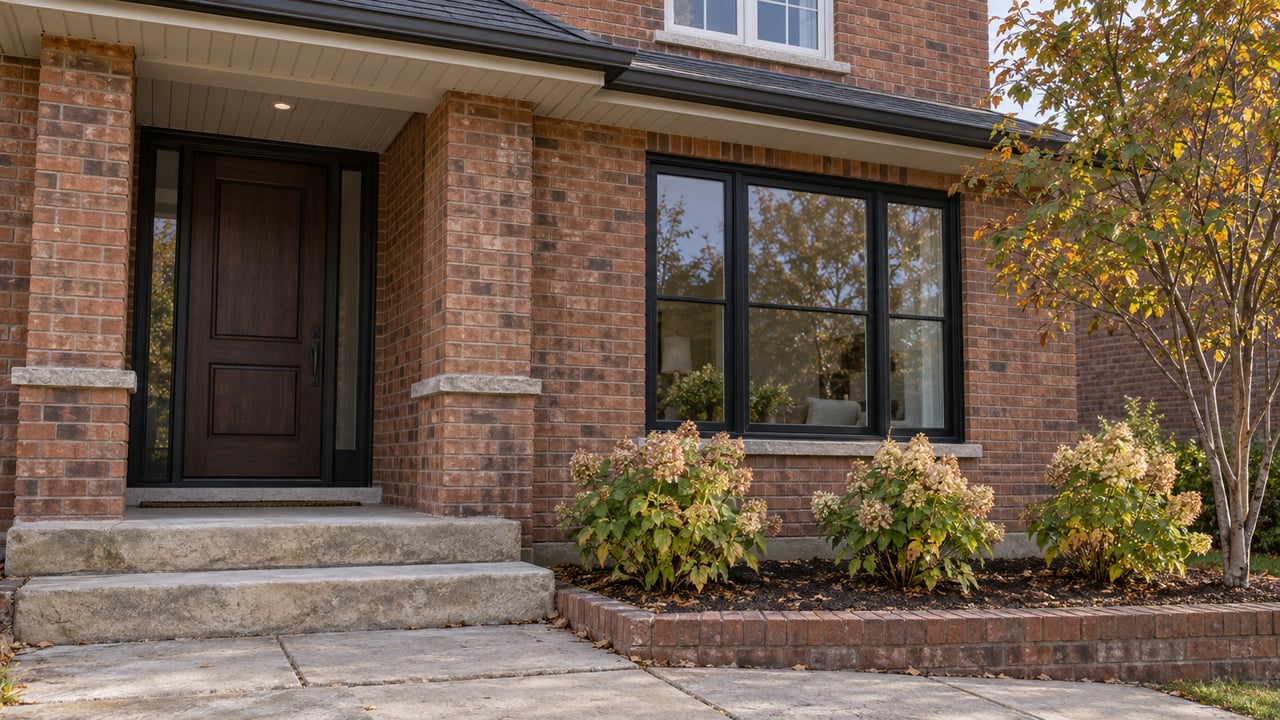
Can You Legally Airbnb a Home in Niagara Falls? The View Doesn't Decide, the Zone Does
October 1, 2026
October 1, 2026
City planning staff have described their own short-term rental framework as one of the most restrictive in the Niagara region, and more broadly in the province. That is the city talking about its own rules, not a frustrated resident or a competing host. For anyone weighing whether a property near the Falls can legally earn Airbnb income, that self-description is the entire due-diligence question compressed into one sentence: the rules limit which properties can qualify for a license.
That matters because the nightly rates and occupancy figures a buyer sees on booking platforms describe a market, not a right to participate in it. Whether a specific address can legally earn that income depends in part on its zoning designation, not its distance from Clifton Hill or the river.
When city planning staff tallied the numbers for a 2025 council report, they counted 64 licensed Vacation Rental Units and 56 licensed bed and breakfasts operating in Niagara Falls. Against that, roughly 2,300 short-term and vacation rentals were advertised across the major booking portals at the same time.
That gap is the first thing a buyer needs to sit with before running any numbers. The listing a buyer finds on a portal, complete with reviews, calendar availability, and a nightly rate, tells you almost nothing about whether that property holds a license or ever could. Most of the advertised supply in this city is operating without one. Staff at the city have not hedged on that point in their own reporting.
Vacation Rental Units are permitted in exactly three places: the Tourist Commercial zone, the General Commercial zone, and the Central Business zone. Zoning By-law 2018-92, which amended the city's original 79-200 zoning by-law, wrote that restriction in and it has held since.
Proximity to the Falls does not factor into that test. A house standing across the street from a hotel tower can sit inside a residential zone, while a property several blocks further away can be zoned commercially. The city's position on keeping VRUs out of residential zones was tested at the Ontario Land Tribunal in 2021 and upheld, a decision residents brought up again during the 2025 public meetings on the ownership pilot described below.
Niagara Falls runs three distinct paths to legal short-term hosting, and they do not overlap much.
| License Type | Where It's Allowed | Citywide Cap | Status as of September 2026 |
|---|---|---|---|
| Vacation Rental Unit (VRU) | Tourist Commercial, General Commercial, Central Business zones only | Active, under escalating enforcement | |
| Bed and Breakfast | Zones where the use is permitted | Active | |
| Owner-Occupied Short-Term Rental (OOSTR) | The City of Niagara Falls lists R1F, R2, R3, R4, and TRM as select residential zones | 100 licenses citywide, according to the City of Niagara Falls | Pilot period ended September 2026 |
The OOSTR program is the newest and most limited of the three doors, and its pilot period ended in September 2026. Council approved a 14-month pilot running from August 2025 to September 2026, capped at 100 licenses citywide. Council's report set a minimum separation of 150 metres, roughly nine to twelve houses, between any two OOSTR properties to prevent them from clustering on one street.
With the pilot period over, city staff are expected to report back to council before the end of 2026 on how many licenses were issued, where they concentrated, how many complaints came in, and what effect the program had on housing supply and rental rates. Only after that review will council decide whether OOSTR becomes a permanent part of the city's rules or disappears.
BnbCalc reports that the city has committed to grandfathering current license holders if the program is discontinued. That protects people who already hold a license. It does nothing for a buyer purchasing this fall on the assumption that a residential-zone OOSTR license will still be obtainable next year. Planning a purchase around a pilot that ended in September 2026 is a real risk, and it should be underwritten as one rather than assumed away.
The rules carry weight because the city has been actively enforcing them through 2026. NOTL Local reported that, during a March Break blitz, Municipal Enforcement Officers actioned 47 properties suspected of operating as illegal VRUs. Twenty-five came into compliance, one by obtaining a license and 24 by removing their listings, and the city issued 37 Administrative Monetary Penalties totaling $37,000. Chris Gallagher, the city's Manager of Municipal Enforcement and Security, said officers work directly with property owners to help them understand the rules and bring their properties into compliance.
The pace picked up over the summer. The City of Niagara Falls reported that between June 22 and July 29, 2026, enforcement officers received 30 new complaints about suspected illegal VRU activity and issued 121 Administrative Monetary Penalties totaling $121,000, with five properties brought into compliance and investigations continuing at others.
For a buyer evaluating a property currently advertised as a short-term rental, that enforcement pattern is the clearest signal that the income shown on the listing may not survive the year, regardless of what the reviews say about demand.
A municipal license, if a property qualifies for one, does not override a condominium corporation's own declaration. Many condo boards in the Niagara region restrict or prohibit short-term rentals outright, independent of what city zoning allows, so the status certificate needs to be checked as its own separate hurdle before a license application is worth pursuing.
The accommodation tax structure has also been in motion through 2026, with different rate mechanisms described at different points in the year. Rather than build a pro forma around a specific percentage, confirm the current rate and remittance schedule directly with the city before finalizing any income projection.
A few questions are worth settling before an offer goes in on anything marketed with short-term rental potential in Niagara Falls:
None of these questions show up in a listing description. All of them determine whether the income a listing advertises is something a buyer can legally replicate.
Can I buy an investment property in Niagara Falls and short-term rent it without living there? Only if the property is zoned Tourist Commercial, General Commercial, or Central Business and qualifies for a Vacation Rental Unit license. The OOSTR pilot ended in September 2026, and no successor program has been confirmed.
What happens to OOSTR licenses if the city discontinues the program? Staff have committed to grandfathering existing license holders. That protects anyone who already has a license when council makes its decision, but it offers no path for a buyer hoping to apply now that the pilot period has ended.
Zoning and licensing details like these change as council reviews new reports, so anything here should be confirmed directly with the City of Niagara Falls before a purchase decision is finalized. For a broader look at what ownership in this market involves beyond short-term rental rules, our guide to considering a Niagara Falls home as a long-term investment and our Niagara Falls neighborhood guide cover the rest of the picture.
If you are looking at a specific Niagara Falls address and want to understand what its zoning actually permits before you make an offer, Anna Fan can help you work through it.
This article is general information, not legal, tax or financial advice. Consult a qualified professional about your situation.
Continue exploring insights and updates from the blog.

Work with a knowledgeable advisor focused on design, innovation, and smart investment opportunities.