Burlington Waterfront Property Permits: Why Seawall Permits Don't Transfer
August 27, 2026
August 27, 2026
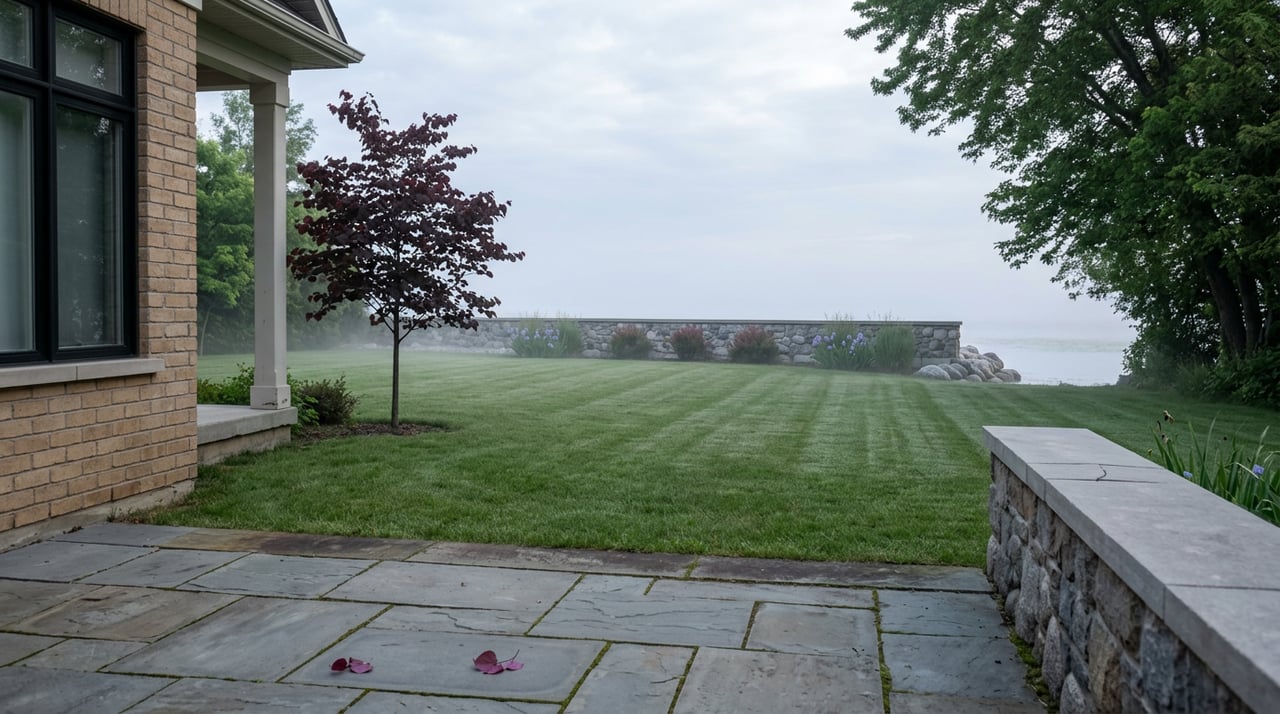
Picture closing week on a lakefront property in Shoreacres. The home inspection came back clean. The break wall along the water looks solid, the concrete poured sometime in the last fifteen years by the look of it. The listing called it "permitted," and nobody's lawyer flagged anything unusual. A few months after the keys change hands, high water pushes waves higher than the new owner expected, a section of the wall needs attention, and the contractor asks for the Conservation Halton permit number on file. That number belongs to someone who no longer owns the house.
This isn't a scare story. It's how the rule is actually written. According to Conservation Halton, permission for shoreline work along Burlington's stretch of Lake Ontario is granted to the applicant, not attached to the address the way a municipal building permit effectively is. Sell the house, and the paperwork stays with the person who filed it.
Conservation Halton has regulated shoreline and floodplain work in this watershed since 1972, and the current rule, Ontario Regulation 41/24, requires permission for construction, alteration, or interference with the Lake Ontario shoreline and adjacent lands. That covers break walls, riprap, retaining walls, docks, and stairs down to the water, along with additions and grading near the shore.
The detail that surprises most buyers is on the permit application itself. Conservation Halton states plainly that permission "cannot be transferred to a new owner," and that any change in ownership requires a new, complete application from scratch. A wall built and approved by the seller in 2015 doesn't come with a permit the buyer can point to in 2026. It comes with a structure that may or may not still meet the standards Conservation Halton applies today, filed under someone else's name.
For a buyer, that means the seawall isn't an asset with paperwork attached. It's a physical structure whose compliance history has to be re-established after closing, on the new owner's own initiative, through the new owner's own application.
Lake Ontario's level doesn't sit still, and this spring it moved fast. According to a shoreline conditions statement issued through the International Lake Ontario-St. Lawrence River Board, the lake rose from about 244.55 feet on March 1, 2026 to roughly 247.05 feet by April 30, a gain of 2.5 feet in two months driven by persistent spring precipitation across the basin. The Great Lakes Commission reported in May that levels had risen above key thresholds, putting shoreline communities at risk of flooding. Public lake-level tracking in early August still showed the lake running above its typical mark for the season, months after that spring surge.
Higher water means more wave energy reaching structures that were engineered for a lower baseline. A break wall that has held for a decade under normal conditions is being tested differently this year than it was three years ago. That raises the odds that a structure a buyer is counting on will need repair, reinforcement, or a fresh look from Conservation Halton sooner rather than later, right at the moment ownership changes hands and the old permit stops applying.
Conservation Halton publishes a general timeline for how long a new application takes, though it varies with complexity.
| Step | Typical Timeframe |
|---|---|
| Confirmation the application is complete | Within 21 days of submission |
| Decision on a complete, policy-compliant application | Generally around 30 days |
| Legislated maximum for a decision | 90 days |
For a buyer who assumed the existing wall's paperwork would simply carry over, discovering a three-month clock, is not the kind of surprise anyone wants after closing.
Burlington complicates this further because it sits inside two different environmental permitting systems depending on where the property is. South, along the lake, Conservation Halton is the gatekeeper. North and inland, toward escarpment communities like Kilbride, the Niagara Escarpment Commission has jurisdiction under its own Development Control area, which Ontario Regulation 826/90 explicitly extends to cover parts of the City of Burlington.
The two systems aren't independent of each other everywhere they overlap. Conservation Halton's own application materials state that in areas under Niagara Escarpment Commission jurisdiction, Conservation Halton cannot issue a permit until the applicant has already secured a Development Permit or Exemption Letter from the NEC. A property near the escarpment can require sign-off from both agencies, in a specific order.
"Check with the city" isn't a complete answer in Burlington. The correct regulator, and sometimes two regulators, depends on the address.
Treat any shoreline structure as a due diligence item, not a settled fact.
A clean paper trail is worth more than a clean-looking wall. Sellers who gather the original permit documentation, any engineering reports, and a basic history of repairs or upgrades give a buyer's lawyer and lender something concrete to review, and give a buyer's future Conservation Halton application a running start instead of a blank page. With water levels in the news this year, buyers touring lakefront listings in Shoreacres, Roseland, and LaSalle are asking more pointed questions about shoreline condition than they were a few years ago. A seller ready with documentation, rather than a verbal assurance that "it's permitted," moves through that conversation faster.
Shoreacres itself is a useful example of why this corridor gets close attention. It's built around the 14-acre Paletta Lakefront Park, anchored by the historic Paletta Mansion at 4250 Lakeshore Road, built in 1931 and later known as the McNichol Estate before the City of Burlington purchased it from the family in the late 1980s to preserve it as public parkland. It's a mature, established stretch of shoreline where many of the homes and their protective structures date back decades, which is exactly the profile most likely to need a fresh look under current water conditions and current regulation, regardless of who owned the property when the wall went in.
Does every lakefront property in Burlington need a Conservation Halton permit to sell? Conservation Halton says a change in ownership requires a new, complete application.
Is 30 days a guarantee? No. That figure applies to complete, policy-compliant applications.
Waterfront real estate in Burlington rewards buyers and sellers who ask the second question, not just the first. If you're weighing a purchase or a sale along the Shoreacres, Roseland, or LaSalle shoreline and want a clear read on what a property's permit history actually covers, Anna Fan can walk through it with you before you're staring at a surprise mid-transaction. You can also start with a look at the broader Burlington neighbourhood guide for context on the wider market, or reach out directly when you're ready to talk specifics.
This article is general information, not legal, tax or financial advice. Consult a qualified professional about your situation.
Continue exploring insights and updates from the blog.

Work with a knowledgeable advisor focused on design, innovation, and smart investment opportunities.