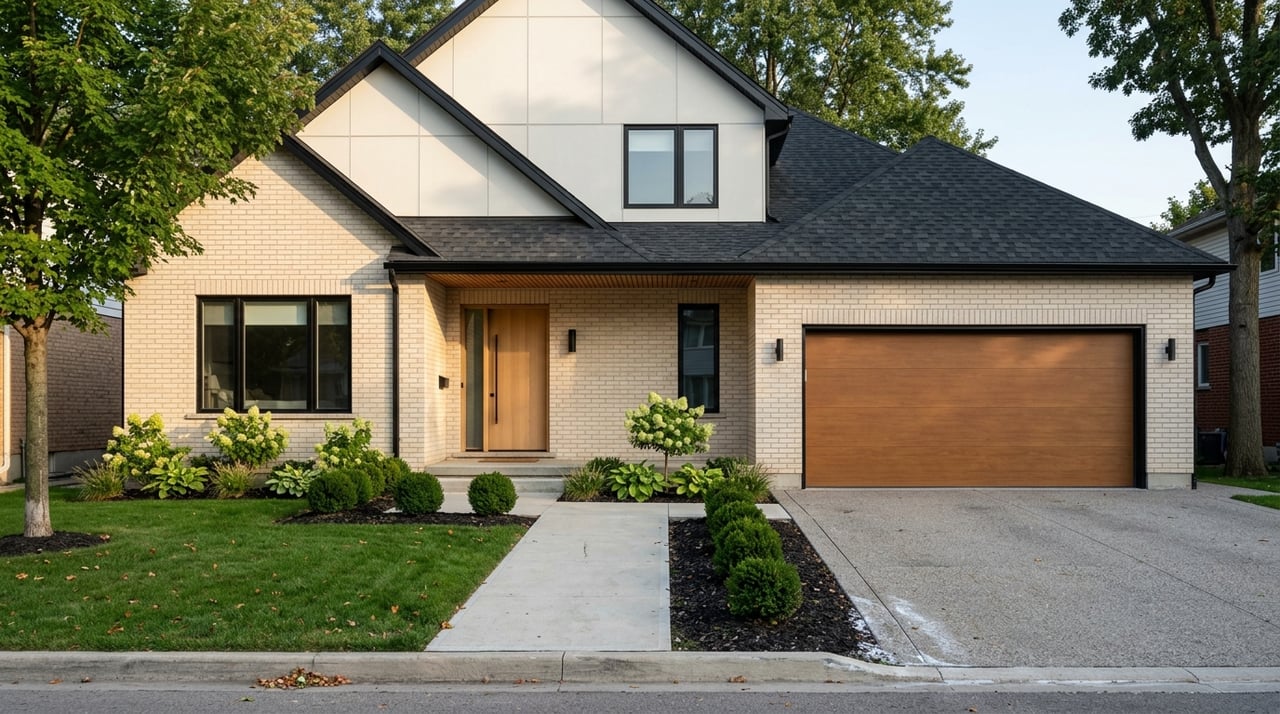
Is Burlington The Right Next Step From Oakville Or Mississauga?
June 18, 2026
June 18, 2026
Wondering whether Burlington gives you more breathing room without feeling too far removed from Oakville or Mississauga? That is a common question for buyers who want a smart next move, not just a change of address. If you are weighing commute time, home prices, lifestyle, and long-term fit, Burlington deserves a careful look. Let’s dive in.
Burlington sits between Lake Ontario and the Niagara Escarpment, giving it a distinct setting within the West GTA. It also benefits from access to the QEW, Highway 403, and Highway 407, which helps explain why so many buyers see it as a practical in-between location.
This is not simply a bedroom community with little change ahead. Burlington’s planning framework points to sustainable growth, complete communities, infrastructure, and design excellence, which suggests a city preparing for continued evolution over time.
If your day-to-day routine still ties you to Oakville, Mississauga, or Toronto, commute convenience matters. Burlington has three active GO stations: Aldershot GO, Burlington GO, and Appleby GO, giving you several entry points into the regional transit network.
Burlington GO connects with Burlington Transit, Appleby GO connects with Burlington Transit and Oakville Transit, and Aldershot GO connects with Burlington Transit plus VIA Rail service. Burlington Transit also connects to Oakville Transit, Hamilton Street Railway, local GO stations, and the 407 Carpool Lot.
For many households, that means Burlington can still work well if you rely on the Lakeshore West corridor. At the same time, if your top priority is the shortest possible trip into Mississauga or Toronto, Burlington is usually a compromise rather than the most convenient choice.
Burlington often makes the most sense if you are comfortable trading a bit of commute convenience for a broader lifestyle package. You may gain more space, more housing choice, and stronger access to waterfront and trail amenities while staying connected to the West GTA.
If you need to be in central Mississauga or Toronto as quickly as possible every day, that trade-off may feel less attractive. The right answer depends on how you balance time, budget, and the kind of home base you want long term.
For many Oakville and Mississauga buyers, the biggest reason to consider Burlington is value. Based on Burlington’s April 2026 market snapshot, the all-residential median sales price was $940,000 and the average sales price was $1,045,590.
That same report showed the average single-family sales price at $1,377,959 and the townhouse or condo average at $736,680. With 597 homes for sale and 3.5 months of inventory, Burlington also offered a level of choice that looked more balanced than an ultra-tight seller’s market.
Oakville’s April 2026 report showed average single-family pricing at $2.04 million. The townhouse and condo average was $871,776.
That gap helps explain why Burlington can feel like a practical next step for Oakville households that want to remain in the west-GTA orbit while improving value. If detached-home pricing in Oakville feels too stretched, Burlington may open up more options without taking you too far from familiar territory.
Mississauga’s March 2026 report showed an average home price of $966,615. The townhouse or row benchmark was $692,200, while the apartment benchmark was $564,100.
These figures are not perfectly identical in method or timing, so they should be read directionally. Still, the broader takeaway is useful: Burlington is meaningfully below Oakville on detached-home pricing and broadly competitive with Mississauga on attached-home affordability.
Burlington is not a one-format market. The city allows Additional Residential Units on lots with detached homes, semi-detached homes, and townhouses, and it identifies missing-middle housing as duplexes, triplexes, fourplexes, row houses, courtyard homes, and small apartment buildings up to four storeys.
That matters if you want more flexibility in how you live or invest over time. Burlington’s housing stock is still anchored by suburban forms, but city policy clearly supports a wider range of housing types as growth continues.
A varied housing mix can give you more ways to match your next move to your budget and lifestyle. You may be looking for a detached home with more room, a townhome that keeps maintenance simpler, or a condo with easier day-to-day living.
It also matters for long-term planning. As Burlington grows, a broader mix of homes can help support different life stages and changing household needs.
Burlington’s strongest lifestyle advantage may be its waterfront identity. The downtown waterfront includes Spencer Smith Park, the Brant Street Pier, which extends 137 metres over Lake Ontario, Discovery Landing, and the Waterfront Trail.
The area also includes cultural destinations like the Art Gallery of Burlington and the Joseph Brant Museum. For buyers who want a suburban setting that still feels connected to a real civic core, this part of Burlington can be especially appealing.
Burlington also offers a substantial active-living network. The city reports 48 km of bike lanes, 47.3 km of bike-route streets, 11.7 km of paved shoulders, 52.5 km of multi-use paths adjacent to roads, and 31.6 km of paved off-road multi-use paths.
That level of infrastructure supports a lifestyle that can feel more connected and flexible than many buyers expect in a west-suburban market. If everyday access to trails, cycling routes, and outdoor movement matters to you, Burlington has a strong case.
Community life is supported by a range of local recreation options. Burlington’s community centres offer registered and drop-in programming, and the city also highlights specialty facilities such as the Music Centre and Student Theatre Centre, along with seven arenas.
For practical long-term needs, Joseph Brant Hospital serves Burlington and surrounding Halton communities as a full-service academic community hospital. That can be an important part of the bigger picture when you are choosing a place to settle for years rather than months.
Burlington’s long-term story is about managed growth, not dramatic reinvention. The city had about 194,100 residents in 2024 and projects growth to 240,050 by 2041 and 265,160 by 2051.
That growth matters because it helps frame Burlington as a city planning for the future. Combined with support for Additional Residential Units and missing-middle housing, it points to a market that is likely to become more diverse in its housing options over time.
Burlington can be a strong fit if you want:
Burlington may be less ideal if you want:
The better question is not whether Burlington is universally better than Oakville or Mississauga. It is whether Burlington aligns better with what you want next.
If your move is mainly about commute efficiency, Burlington may feel like a compromise. If your move is about balancing value, space, lifestyle, and long-term fit within the West GTA, Burlington is a very credible next step.
A thoughtful move starts with understanding what you are really optimizing for. If you are comparing Burlington with Oakville or Mississauga, the smartest decision usually comes from looking at your timing, budget, property type, and daily routine together rather than in isolation.
If you are considering a move and want strategic guidance across Burlington, Oakville, Mississauga, or the broader West GTA, Anna Fan can help you weigh your options with clarity and confidence.
Continue exploring insights and updates from the blog.
Work with a knowledgeable advisor focused on design, innovation, and smart investment opportunities.