What It’s Like To Own A Home In Niagara Falls As A GTA Resident
July 9, 2026
July 9, 2026
If you live in the GTA and keep wondering whether Niagara Falls could work as a home base, you are not alone. The idea is easy to understand: more space, a different pace, and a city that offers both everyday living and destination-level energy. If you are weighing lifestyle, access, home types, and long-term flexibility, this guide will help you understand what ownership in Niagara Falls actually feels like. Let’s dive in.
If your mental picture of Niagara Falls starts and ends with the Falls, Clifton Hill, and packed summer sidewalks, that is only part of the story. Niagara Falls is also a mid-sized Ontario city with established residential areas, municipal services, parks, trails, recreation programs, and community facilities that support full-time living.
In the 2021 Census, Niagara Falls had 94,415 residents and 37,793 occupied private dwellings. The homeownership rate was 70.4%, and the city covers 210.25 square kilometres, which helps explain why it often feels more spread out and more detached-home oriented than many core GTA municipalities.
That scale matters when you are thinking like a GTA buyer. Niagara Falls is not simply a weekend destination. It is a residential market inside the Niagara Region and the broader Golden Horseshoe, with long-term growth planned through more compact, connected, and transit-supportive development.
Owning a home in Niagara Falls often means adjusting your expectations in a good way. The city can feel less compressed than the GTA, with more physical space, more detached housing, and a clearer divide between visitor-heavy zones and quieter residential pockets.
At the same time, tourism is part of the local rhythm. Niagara Region welcomes about 14 million visitors a year, and the city of Niagara Falls welcomes about 12 million of them. That shows up most clearly near the Falls, Clifton Hill, Fallsview, and other tourism-focused corridors.
If you buy near those areas, you should expect more crowding, more parking pressure, and more weekend activity than you would in a typical suburban GTA setting. If you choose a more residential part of the city, the day-to-day experience may feel much calmer and more neighborhood-based.
One of the most important ownership decisions in Niagara Falls is choosing the right setting for your lifestyle. The city’s own planning framework distinguishes tourism-designation areas from other parts of the city, which is a practical clue that not every location will feel the same once you move in.
For you as a buyer, that means it is worth thinking beyond the headline location. A home close to major attractions may offer convenience and energy, but it can also come with heavier visitor traffic and a more commercial feel. A home in a quieter residential pocket may offer a more typical year-round living experience.
This is where strategy matters. If you are coming from Oakville, Mississauga, Toronto, or another West GTA market, it helps to define whether you want Niagara Falls to function as your primary home, a part-time residence, or a long-term hold with future flexibility.
For most GTA residents, the biggest lifestyle question is access. Can you own in Niagara Falls and still stay connected to Toronto or the West GTA? The answer is yes, but it usually works best when you view the trip as regional travel rather than a quick daily commute.
GO Transit offers year-round service to Niagara Falls, and the GO+WEGO option runs seven days a week to Niagara Falls GO Station at 4267 Bridge Street. That makes Niagara Falls part of the broader Greater Golden Horseshoe transit network, not an isolated market.
Still, this is usually better suited to hybrid workers, second-home owners, retirees, or buyers who only need occasional access back to the GTA. If your work or lifestyle depends on a fast, routine Toronto commute every day, Niagara Falls may feel less convenient than you hoped.
Even with regional transit options, driving remains important in Niagara Falls. The QEW is identified in city planning documents as the major highway transportation corridor through the Niagara Region, which makes it central to how many owners move between Niagara Falls and the rest of the Golden Horseshoe.
That has practical ownership implications. If you plan to split time between Niagara Falls and the GTA, your experience may depend heavily on how often you drive, when you travel, and how much flexibility you have around timing.
Winter is also part of the equation. The city clears about 200 kilometres of sidewalks, while the Ministry of Transportation handles snow removal on the QEW and other 400-series highways. For year-round owners, that is useful context if you expect to rely on both local roads and highway access through the colder months.
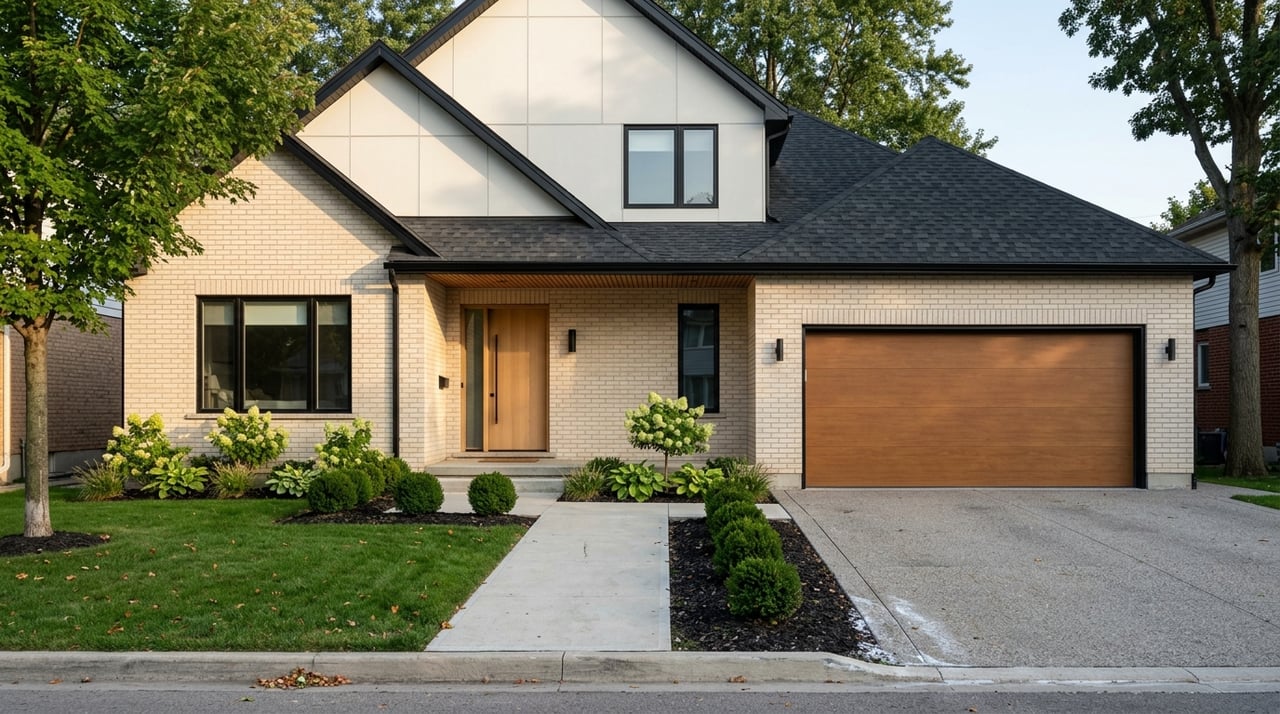
If you are coming from a condo-heavy or townhouse-heavy GTA submarket, Niagara Falls may feel refreshingly house-oriented. According to the 2021 Census, 66.1% of occupied private dwellings in Niagara Falls were single-detached houses.
Other home types are available, but in smaller shares. Apartments in buildings with fewer than five storeys made up 13.2% of occupied dwellings, row houses 7.5%, semi-detached houses 5.5%, and apartments in buildings with five or more storeys 4.2%.
For buyers, this means you will still find a meaningful range of choices. Detached homes remain the dominant form, but there are also lower-maintenance options that may appeal to downsizers, first-time buyers, or GTA owners who want a simpler second property.
One reason GTA buyers look at Niagara Falls is flexibility. You may be looking for more interior space, a different pace of life, or a property that can adapt over time as your needs change.
Niagara Falls has a clear framework for additional dwelling units. On urban residential land served by municipal sewer and water, a property can have up to two additional dwelling units, subject to zoning. A building permit is required, and the additional units cannot be severed from the main dwelling.
That matters if you are thinking about a legal in-law suite, a multigenerational setup, or a mortgage-helper arrangement. It also means you should approach these opportunities carefully and with full attention to local rules, rather than assuming any finished basement or accessory space will qualify.
Some GTA buyers also view Niagara Falls through an investment lens. That can make sense, but it is important to separate lifestyle appeal from income assumptions.
For long-term rental context, CMHC reported a 3.9% vacancy rate for purpose-built rentals in the broader St. Catharines–Niagara CMA in 2025, with an average two-bedroom rent of $1,527. CMHC also noted that Niagara Falls sub-regions were less stable than most other parts of that market, which suggests rental conditions can vary across the city.
In practical terms, that means you should be selective. If you are buying with future rental use in mind, location, property type, and local submarket conditions all deserve close review.
Niagara Falls has clear short-term rental rules, and they matter. The city says a Vacation Rental Unit is a short-term rental for tourists and visitors and must be licensed.
The Municipal Accommodation Tax applies to short-term accommodation of 28 days or less. The city also notes that owner-occupied short-term rentals are being tested through a 14-month pilot running from August 2025 to September 2026.
Fees and enforcement are also very specific. The city’s fee schedule lists a $500 new licence or ownership-change fee and a $250 annual renewal fee for vacation rental units, bed-and-breakfasts, or owner-occupied short-term rentals. The fines page lists a $1,000-per-day penalty for operating contrary to licence rules.
If part of your ownership plan involves short-term income, do not treat that as automatic. Niagara Falls actively regulates and enforces this area, so your purchase strategy should reflect the actual licensing framework from the start.
For many GTA residents, Niagara Falls works best when the goal is not to replicate Toronto-area living, but to create a different kind of ownership experience. It can be a strong fit if you want more space, more detached-home options, and a city that blends daily residential life with year-round destination amenities.
It may also suit you if your work is hybrid, your travel schedule is flexible, or you want a property with multigenerational or future-use potential. For some buyers, it can serve as a primary residence. For others, it may make more sense as a part-time base or a longer-term strategic hold.
The key is to buy with clarity. In Niagara Falls, location within the city, travel habits, and intended use matter just as much as the home itself.
If you are comparing Niagara Falls with your current West GTA lifestyle, the smartest approach is to look beyond price or square footage alone. You want a property that matches how you actually live, travel, and plan for the future. If you are considering a move, second home, or investment-minded purchase, Anna Fan can help you evaluate the opportunity with a clear, strategic lens.
Continue exploring insights and updates from the blog.

Work with a knowledgeable advisor focused on design, innovation, and smart investment opportunities.